New Rules For Travelling With Drones In Thailand
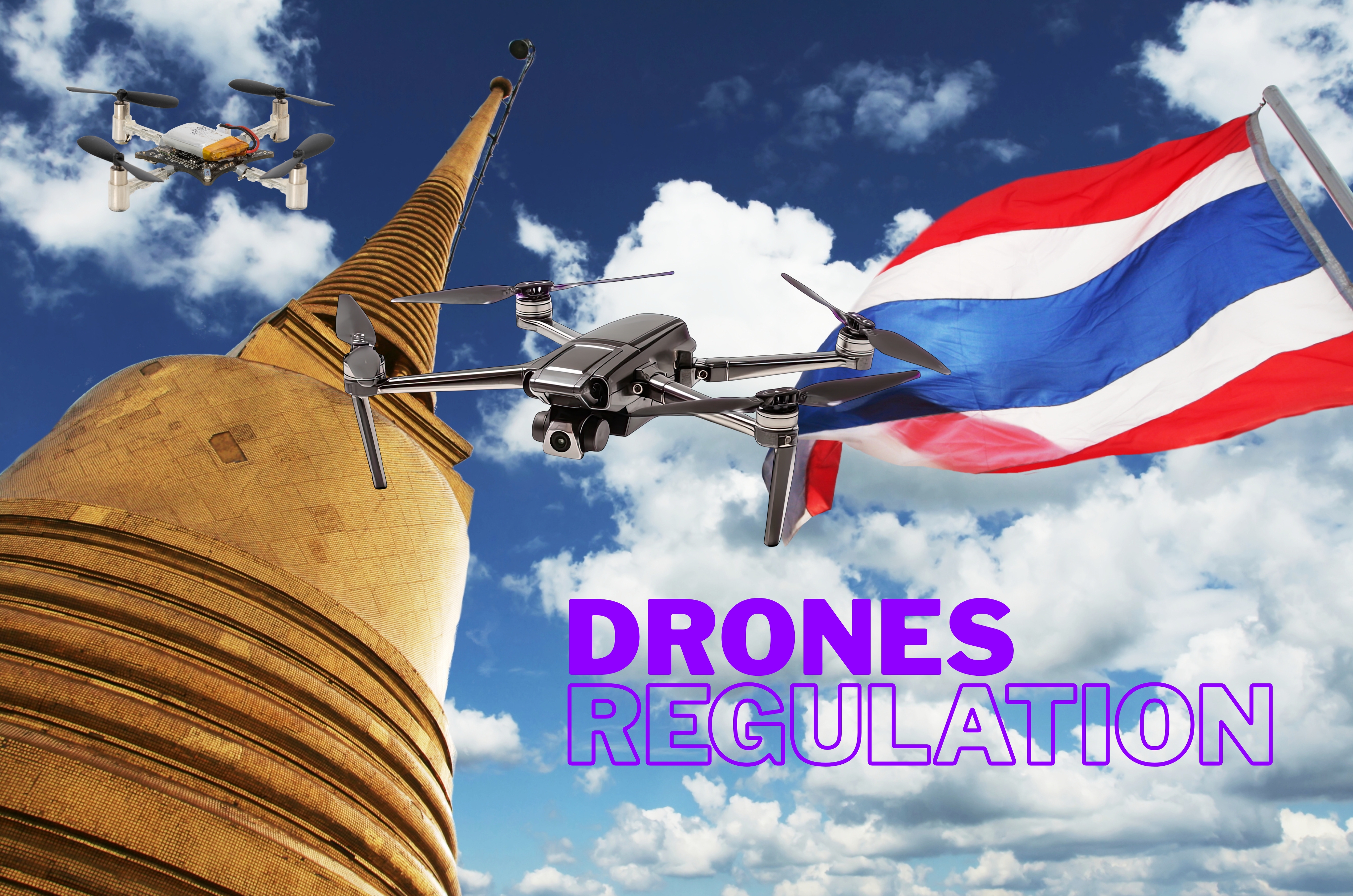
Capturing Thailand’s scenery from above is a big part of the travel experience for many visitors. Drones make it possible to document beaches, temples, mountains and vibrant cities in a way that ordinary pictures cannot. To help travellers enjoy this safely and without interruptions, the Civil Aviation Authority of Thailand has introduced updated rules that must be followed by anyone planning to fly a drone in the country. These requirements apply to tourists and residents alike, and non-compliance can lead to fines, confiscation of the drone or even legal action.
Here is what you need to know:
1. Mandatory Registration of Drones
All drones brought into Thailand must be formally registered before they can be flown. Registration takes place with both the National Broadcasting and Telecommunications Commission and the Civil Aviation Authority of Thailand through their UAS Portal. Travellers will be required to provide passport details, proof of ownership of the drone, information on the drone’s specifications including its serial number, and a brief outline of the planned flight itinerary. This information should be submitted at least three days in advance of the intended operation. Larger drones, specifically those weighing more than twenty-five kilograms, require further written approval from the Minister of Transport before they can be used.
Registration can be completed online via the NBTC platform at https://anyregis.nbtc.go.th/ and the CAAT portal at https://uasportal.caat.or.th/.
2. You Also Need Drone Insurance
In addition to registration, drone insurance is mandatory. The required coverage must protect against third-party liability up to 1,000,000 Thai Baht (≈ $30,750 USD) for most drones. Without proof of this insurance, registration will not be approved.
3. Drone Pilot Certification
Tourists who intend to operate a drone in Thailand must also complete a pilot certification process. The certification is obtained through an online exam, and if the applicant does not pass on the first attempt, a retake is allowed after a brief waiting period. Once approved, the certificate remains valid for two years. The registration number issued during this process must be visibly marked on the drone so that authorities can identify it easily during operations.
4. General Flight Rules
Thailand enforces strict operational rules for drone flights to protect safety, privacy, and airspace integrity. Pilots must keep their drones within visual line of sight at all times and may only operate during daylight hours, specifically between 6:00 and 18:00 (GMT +7). Drone flights are limited to a maximum altitude of 90 metres (300 feet) above ground level unless special authorisation has been granted through the UAS Portal. Weather conditions must be suitable, meaning no flying in heavy rain, strong winds or low visibility without prior approval.
Registration can be completed online via the NBTC platform at https://anyregis.nbtc.go.th/ and the CAAT portal at https://uasportal.caat.or.th/.
Drone operations are not permitted near airports, airstrips or sensitive borders. Pilots must remain at least 9 kilometres away from all airports unless they have been given explicit permission to fly closer. In addition to these restrictions, travellers should avoid flying in designated border provinces, including Sa Kaeo, Buri Ram, Si Sa Ket, Surin, Ubon Ratchathani, Trat, and Chanthaburi. These areas are more heavily controlled due to security and airspace concerns.
5. No-Fly Zones: Respect people and private property
Privacy and security regulations are also taken seriously across the country. Drones must not be flown over crowds, public gatherings or private property without the necessary consent. They are strictly prohibited around hospitals, government facilities, military areas and royal residences. Some national parks require separate approvals before any aerial activities are allowed. These rules are consistently enforced, especially in well-known tourist destinations where drone use is common.

Ignoring Thailand’s drone regulations carries serious consequences. Operating an unregistered drone or flying without the appropriate authorisations may result in fines of up to THB 100,000 (approximately USD 3,100 or ₦4,500,000), imprisonment of up to five years, and confiscation of the drone. Enforcement is active and consistent, particularly in high-traffic tourist locations, making full compliance essential for any traveller intending to fly a drone in the country.
Thailand remains an exceptional destination for aerial photography, and drones provide the opportunity to capture its landscapes from a unique perspective. To ensure a smooth experience, travellers are advised to complete all registration, certification and insurance requirements well in advance of their trip, as approvals may take several days.
Afari Travels & Tours is committed to delivering an exceptional travel experience in Thailand. We design tailored itineraries that highlight the country’s most stunning locations, including ideal spots for aerial photography and unique perspectives from above. For travellers seeking to elevate their content, we can also coordinate premium photo opportunities and professional drone coverage. With thoughtful trip planning and expert destination guidance, you can focus fully on capturing Thailand’s beauty while enjoying a seamless and memorable journey.
)
)
)